Lincolnshire, England
Ancaster Stone
Lincolnshire's golden limestone: a warm, durable freestone with a 2,000-year history in the English heartlands
Colour
Warm honey-gold to buff with a fine oolitic grain. Comes in two main varieties: Hard White (paler, harder) and Weatherbed (warmer, more golden). Both weather to a rich, mellow tone.
Hardness
Medium (Mohs 3–4)
Best For
- Ashlar walling & facades
- Heritage & conservation
- Carved details & mouldings
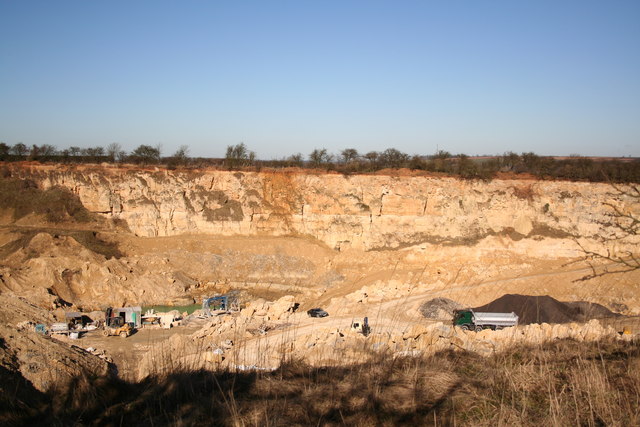
Ancaster Stone is Lincolnshire's principal building limestone: a warm, golden oolitic freestone quarried from the Jurassic limestone belt near the village of Ancaster in Kesteven that has been used continuously since Roman times and whose characteristic honey-gold colour defines the visual character of the Lincolnshire limestone villages, country houses, and market towns of the county's western edge.
What Is Ancaster Stone?
Ancaster Stone is a Jurassic oolitic limestone belonging to the Lincolnshire Limestone Formation. The same broad geological sequence that also produces Clipsham Stone to the north and the Cotswold limestones to the south. The Lincolnshire Limestone was deposited approximately 165 million years ago in shallow tropical seas, and the oolitic texture (tiny spherical calcite grains cemented together in a fine matrix) is characteristic of the formation throughout its extent.
Ancaster Stone comes in two principal commercial varieties. Ancaster Hard White is the paler, denser, more durable of the two: a fine-grained, cream to pale buff stone with good frost resistance and workability, well-suited to exposed external work. Ancaster Weatherbed is warmer in colour (golden-buff to honey) and has a slightly more open texture, making it more responsive to carved work but requiring more careful specification in exposed positions.
Both varieties have been quarried at Ancaster since at least the Roman period. The Roman town of Causennae was established near the quarry, and Ancaster Stone appears in Roman structures throughout Lincolnshire and beyond.
Colour and Character
Ancaster Hard White is a clean, pale buff to cream, cooler and paler than Bath Stone, similar in tone to the lighter Clipsham beds. Ancaster Weatherbed is warmer and more golden, with the rich honey tone characteristic of the Jurassic limestones. Both varieties weather to a mellow, golden-buff that sits well against the agricultural landscape of the East Midlands.
The oolitic grain gives both varieties a fine, rounded texture: soft to the touch and responsive to tooling. The colour consistency within each variety is good, making Ancaster suitable for large-scale ashlar work where tonal uniformity is important.
Historical and Architectural Significance
Lincoln Cathedral uses Ancaster Stone extensively alongside other local limestones. Numerous Lincolnshire churches, country houses, and market town buildings testify to the stone's central role in the region's built history.
The stone was also exported widely throughout the medieval and post-medieval periods, appearing in buildings as far afield as Cambridge (where it was used in several college buildings) and London.
Applications
Ashlar walling: Ancaster's combination of workability, warm colour, and weathering behaviour make it a good ashlar freestone. Both Hard White and Weatherbed varieties are used for dressed facades, quoins, window and door surrounds, and full ashlar elevations.
Heritage and conservation: The extensive use of Ancaster Stone in Lincolnshire's historic buildings creates ongoing demand for conservation and restoration work. Matching the original stone (particularly distinguishing between Hard White and Weatherbed beds) is important for sympathetic conservation.
Carved work: As a freestone, Ancaster can be worked in any direction. The Weatherbed variety in particular is highly responsive to carved detail: mouldings, capitals, keystones, and decorative elements can all be executed with good precision.
Steps and copings: Hard White is generally preferred for copings and exposed horizontal surfaces where frost resistance is important.
Garden walls: The warm golden tone of Ancaster Stone suits the English garden tradition. Walls, pillars, and garden features sit naturally with planting.
New build: Contemporary buildings in Lincolnshire and the surrounding counties that seek to maintain the regional character of the Jurassic limestone belt specify Ancaster for new ashlar facades. The stone is the natural choice for traditional-style new build in the area.
Sourcing
Ancaster Quarry in Lincolnshire continues to operate, supplying both Hard White and Weatherbed varieties in a range of formats including ashlar blocks, random rubble, dressed units, and carved work to specification. For heritage projects, the quarry can advise on bed selection and matching to existing historic material.
What is Ancaster Stone used for?
- Ashlar walling & facades
- Heritage & conservation
- Carved details & mouldings
- Steps & copings
- Garden walls & features
- Period & traditional new build
- Interior features
Where to buy Ancaster Stone
Suppliers stocking Ancaster Stone across Ireland and the UK. What the Verified badge means.
Stonemasons who work with Ancaster Stone
Find a skilled installer experienced with Ancaster Stone near you.
Kilsaran
Dunboyne, Louth
Ireland's largest independent concrete products manufacturer, founded 1964. Supplies paving, blocks, aggregates, asphalt, renders and precast concrete across Ireland and the UK.
Keegan Quarries
Rathmolyon, Meath
County Meath quarry group established 1990, supplying certified pyrite-free aggregates, limestone, ready-mix concrete and blocks across Dublin, Kildare, Meath and Louth. Winner, Sisk Supplier of the Year 2023.
London Stone
Staines-upon-Thames, Greater London
UK market leader in natural stone and porcelain paving with 11 showrooms nationwide. Supplies sandstone, limestone, granite, Yorkstone, basalt and slate with free next-day delivery over £750.
Irish Stone
VerifiedHillsborough, Down
ISO triple-certified natural stone consultancy, merchant and contractor with offices in Belfast, Dublin and London. Specialists in ethical stone sourcing, hard landscapes, facades and conservation.
Marshalls
Halifax, Yorkshire
The UK's leading hard landscaping manufacturer supplying natural stone paving (sandstone, limestone, granite, Yorkstone), bricks, drainage and aggregates to residential and commercial markets.
Kwality Wholesale Stone
Austin, Texas
Stone yard (open to the public) selling limestone, sandstone, waterfall boulders and landscaping items.
Frequently asked questions about Ancaster Stone
What is Ancaster freestone?
The fine, even bed of the Ancaster quarries that can be cut and carved in any direction without splitting along a grain. Freestone is a mason's term for that property, and it is what makes the bed suitable for detailed work.
What are the Ancaster beds?
The quarries work several distinct beds that differ in grain, hardness and colour, from the even freestone to harder and more strongly marked stone. Specifications name the bed, because asking simply for Ancaster stone leaves too much open.
What colour is Ancaster stone?
Cream to warm buff, with some beds carrying pronounced brown or blue-grey banding. The banded stone is often chosen deliberately where a livelier face is wanted.
Where is Ancaster stone quarried?
At Ancaster in Lincolnshire, from the Lincolnshire Limestone that also produces Clipsham a little to the south. The village has been a quarrying centre since Roman times.
What is Ancaster stone used for?
Ashlar, mouldings, tracery, carving and monumental work, and conservation repairs to buildings originally built from it. It is a fine-detail stone more than a bulk walling one.
How does Ancaster compare with Clipsham?
They are neighbours from the same limestone and look similar, but Clipsham is generally harder and stands exposure better, while Ancaster works more sweetly under the chisel. The choice usually comes down to exposure against carving.
About this entry
found.rocks is an independent reference for natural stone across Ireland and the UK. Stone Library entries are written in-house. Businesses cannot pay to appear in them, and no listing on this page was bought.
Explore more stones

Portland Stone
The stone of Wren's London, a creamy white limestone that weathers lighter rather than darker
Isle of Portland, Dorset, England

Donegal Quartzite
Silver-white metamorphic stone from the wild Atlantic coast
Donegal, Ireland

Kilkenny Blue Limestone
Quarried mid-grey, polished blue-black: Ireland's dark interior limestone
Kilkenny, Ireland